You will remember what was forgotten
Doctor Sleep“You will remember what was forgotten” is a recurring expression in Dan Torrance’s thoughts after the Pyrrhic victory at Cloud Gap. Its significance lies in the way it returns at moments of uncertainty and guilt, leading Dan toward memories of the Overlook Hotel and Tony, and echoing a later recovery of a forgotten clue to his family history. The phrase does not arrive as a clear explanation; it works through repetition, first an irritating refrain and then a prompt beside memories Dan had put away.
A Refrain After Cloud Gap
In the aftermath of the Cloud Gap operation, the phrase runs through Dan’s mind like an irritating scrap of music that will not stop. He associates it, without understanding why, with Tony. The repeated wording initially offers no practical instruction, but its insistence distinguishes it from ordinary background thought: Dan keeps encountering it as the consequences of the plan unfold.
The True Knot’s abandoned Winnebago is one of those consequences. Dan and his companions refuse to use it, both because they do not want to be seen or leave forensic evidence and because it smells of sickness, death, and evil. Dan also fears that the True Knot’s members might return as ghostie people. The group discards the abandoned clothes and drug paraphernalia in the Saco River, where anything that floats will drift downstream toward Maine, and returns by The Helen Rivington. The phrase recurs in this unsettled aftermath, alongside practical traces of the violence and Dan’s concern about what may follow.
Guilt and the Overlook Memory
The refrain returns as David Stone blames Dan for the plan, calling it his crazy idea. Dan does not dispute the accusation: everyone had agreed to it, but the others are nearly as troubled by Abra Stone’s silence as her father is, and Dan accepts that David’s blame is justified. John Dalton warns that if Abra has been taken, involving the police could put her at further risk. Dan tries to reach her mentally and receives no answer; he suspects that the Crow has incapacitated her.
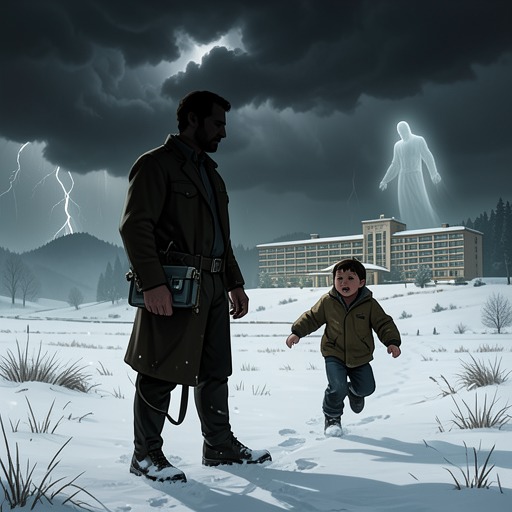
At this point, the phrase’s source seems to Dan to be buried in the deepest part of his mind, among the lockboxes holding terrible memories of the Overlook Hotel and its ghosts. It appears again, and Dan suddenly says, “It was the boiler.” The abrupt declaration connects the refrain to an old danger rather than resolving every uncertainty surrounding Abra. Dan wonders whether the thought is a warning or only a stress-driven mnemonic intensified by guilt. His inability to reach Abra and his sense of responsibility make the distinction difficult to settle: the phrase might carry useful knowledge, but it arrives in the same inward register as haunting memory.
The Warning That Was Forgotten
The recalled boiler memory concerns the Overlook’s ancient heating system. Steam pressure had to be released at intervals; otherwise it continued to build until the boiler could explode and destroy the hotel. Jack Torrance, descending into dementia, forgot this danger. His young son had been warned about it by Tony. The memory gives the expression a concrete association: forgetting is not merely the loss of a private detail, but the omission of knowledge that can determine whether someone survives.
Dan links the danger to his own survival. Jack’s failure to remember the boiler warning was part of the chain of events that left Dan alive. Yet the refrain does not make the recovered memory feel reassuring. Dan cannot tell whether Tony is communicating a fresh warning about the present crisis or whether stress has brought an old memory back in a form that sounds urgent. Its force comes from that uncertainty and from the timing: as Dan worries that Abra has been taken, a forgotten lesson about lethal pressure returns from the Overlook.
A Later Recovery of Family Memory
The expression’s pattern also resonates with a later conversation between Dan and Lucy Stone. Dan describes how, when Abra was very young, Jack would rub his mouth while on the warpath. Lucy recognizes that Abra rubs her mouth when upset and says she had assumed the gesture, and Abra’s temper, came from her. Lucy demonstrates the movement herself before lowering her hand. Dan remembers having seen Abra make the same gesture on the bench outside the Anniston Public Library, when they first met face to face.
Dan says that the gesture initially made him think of his father, but other concerns occupied him and he forgot the association. He also recalls Watson, the Overlook caretaker, warning Jack to watch the furnace boiler because it could creep toward danger; Jack ultimately forgot that warning too. Lucy reasons that Dan’s recognition of a shared family trait must also involve the shining, and Dan explains that Dick Hallorann had taught him that many people possess it to varying degrees. Billy Freeman is one such person, which is why he is with Abra. The episode does not establish that the refrain directly causes Dan’s recognition. Instead, it supplies a striking parallel: a telling detail can be noticed, set aside, and later return with new meaning.
Repetition as Narrative Structure
The phrase recurs five times in the immediate post-Cloud Gap passage, interrupting the account of travel, blame, danger, and memory. Its repeated placement makes remembrance feel less like a deliberate search than an involuntary return. Each appearance sits near something unresolved: the group’s departure from the hostile Winnebago, David’s accusation, Dan’s failed attempt to contact Abra, or the Overlook memory surfacing behind his thoughts.
The wording promises eventual recovery, but the story gives that promise a complicated edge. Remembering may expose a useful warning, as the boiler episode demonstrates, or reveal the significance of an ordinary bodily habit only after its first appearance has passed. The expression therefore binds together supernatural recollection and ordinary human forgetfulness without making them identical. Tony’s association points Dan toward the Overlook, while the later family conversation shows how an overlooked observation can become legible in retrospect. In both cases, what returns matters because it changes how the present can be understood.